
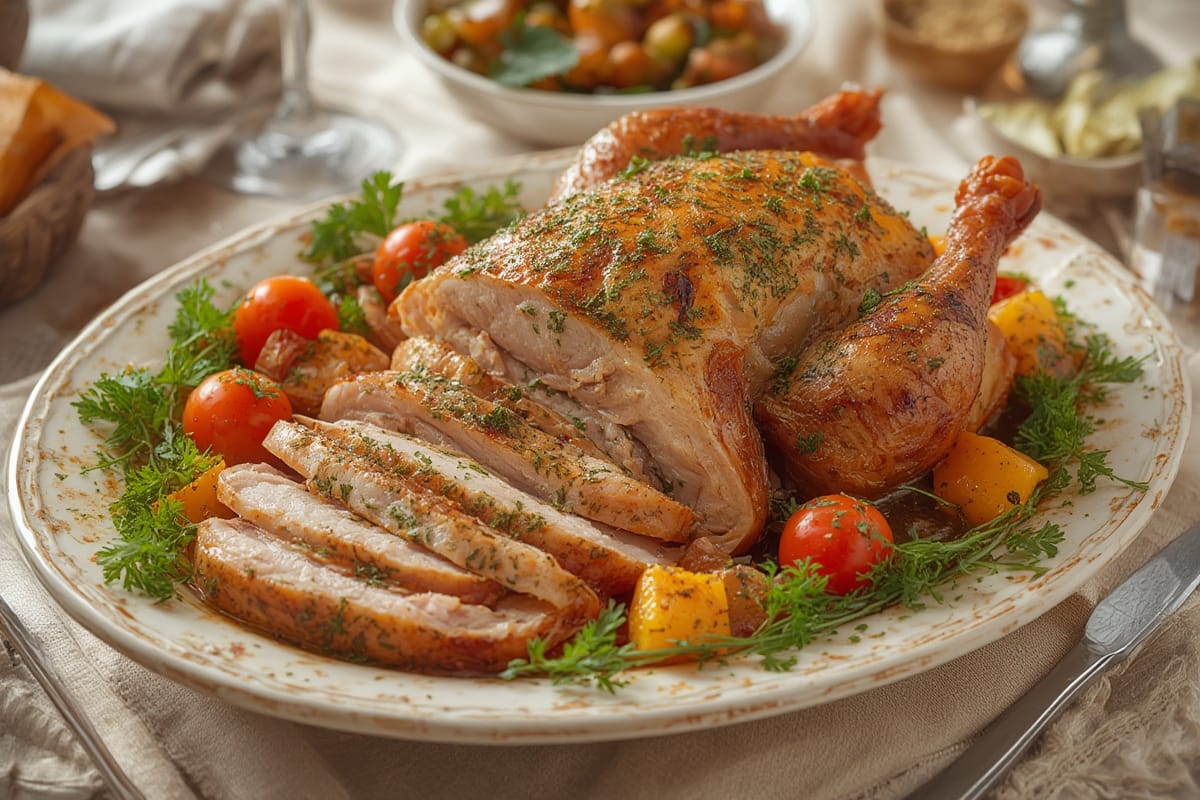
As the aroma of roasting turkey fills my Charleston kitchen, I’m transported back to my grandmother’s cozy linoleum-floored hearth. She’d hum gospel tunes while prepping her famed holiday bird, teaching me to trust my senses over rigid rules. Her secret? A simple turkey brine—a magic potion of salt, herbs, and time that transformed even modest birds into succulent masterpieces. At FlavivoRecipes.com, we’re all about stress-free, flavor-packed dishes that honor tradition while inviting creativity. Whether you’re hosting Thanksgiving or spicing up Sunday supper, mastering turkey brine is your ticket to tender, juicy meat. Let’s dive in!
Part 1: Why Brining Is Your Turkey’s Best Friend
The Science Behind Perfect Turkey Brine
Brining works like a flavor superhighway. Salt in the brine breaks down muscle fibers, allowing moisture and seasoning to penetrate deep into the turkey. The result? Meat that stays juicy even if you accidentally overcook it—something my grandmother swore by during her famously chatty holiday dinners. A well-crafted turkey brine also balances flavors, letting herbs like rosemary and thyme shine.
For those skeptical of fussy techniques, remember: brining is forgiving. Unlike precise baking, it invites experimentation. Swap white sugar for maple syrup in your brine, or add orange zest for brightness. My spatchcock turkey guide pairs perfectly with brining for faster, even cooking.
A Nostalgic Brining Story
One Thanksgiving, my grandmother accidentally doubled the salt in her brine. Panicked, she soaked the turkey in fresh water and improvised with a brown sugar glaze. That bird became legendary—crispy-skinned, sweet-salty, and impossibly moist. It taught me that kitchen “disasters” often spark the best recipes. Today, my turkey brine recipe includes brown sugar as an homage to her happy accident.
Part 2: Building Your Brine—Tools, Tips, & Timing
Ingredients List: Customize Your Flavor Profile
Pickling salt
Cold water (1 gallon per 4 lbs of turkey)
Brown sugar or maple syrup
Herbs (sage, thyme, rosemary)
Aromatics (garlic, peppercorns, bay leaves)
Optional: Apple cider vinegar or citrus slices
Crowd-Pleasing Swaps
- Sugar Alternatives: Try honey or molasses for deeper flavor.
- Herb Variations: Swap rosemary for tarragon in this herb-roasted turkey twist.
- Spice Boost: Add star anise or juniper berries for complexity.
Timing & Brine Calculator
Brining isn’t “set it and forget it”—timing matters! Too little, and flavors won’t permeate; too long, and meat turns mushy. Use this table to nail your soak:
| Turkey Weight | Brine Time | Salt Quantity* |
|---|---|---|
| 8-12 lbs | 12–18 hours | 1 cup |
| 12–16 lbs | 18–24 hours | 1.5 cups |
*Use 1/2 cup salt per gallon of water.
Step-by-Step Brining Guide
- Dissolve & Cool: Boil 2 cups water with salt/sugar until dissolved. Add cold water/ice to cool.
- Submerge Turkey: Place bird in a non-reactive container (stockpot, brining bag). Pour brine over it.
- Refrigerate: Keep at 40°F or below. The USDA’s food safety guidelines emphasize this for avoiding bacteria.
- Rinse & Dry: Pat skin dry for maximum crispness—key for my crispy-skinned turkey method.
Part 3: Wet Brine vs. Dry Brine—Which Wins?
When to Choose a Wet Brine
Wet brining (soaking in salted water) is ideal for first-timers. It’s foolproof for juicy meat, especially if you’re using frozen turkeys prone to drying out. Bonus: It tenderizes tougher birds. Just ensure your fridge has space!
The Case for Dry Brining
Dry brining—rubbing salt directly on the turkey—creates uber-crispy skin since the surface isn’t waterlogged. It’s my go-to for smaller turkeys or herb-crusted recipes like this garlic-herb turkey. Less mess, deeper seasoning penetration, but requires 2–3 days in the fridge.
Part 4: Pro Tips for Brine Success
Avoiding Common Pitfalls
- Over-Brining: Stick to 24 hours max! Excess salt draws moisture out.
- Underseasoning: Taste your brine—it should be slightly saltier than soup.
- Soggy Skin: Air-dry brined turkey uncovered in the fridge for 4–6 hours pre-roasting.
Brine Beyond Thanksgiving
Don’t reserve brining for holidays! Try it on chicken wings, pork chops (halal-friendly cuts), or even tofu. My smoked turkey breast recipe uses a cider brine for year-round sandwiches.
FAQ: Turkey Brine Edition
Wet brine vs. dry brine?
Wet brines (liquid-based) ensure even moisture but require fridge space. Dry brines (salt-rubbed) yield crispier skin and intensify flavors but need more lead time.
How long should you brine a turkey?
12–24 hours, depending on size. A 15-pound bird needs ~18 hours. Never exceed 24 hours!
Do you rinse the turkey after brining?
Yes! Rinse thoroughly to prevent overly salty meat. Pat dry with paper towels for crispy skin.
How much salt per pound?
Use 1/2 cup kosher salt per gallon of water for wet brines. For dry brines, apply 1 tbsp salt per 5 lbs of turkey.
Conclusion: Brine with Confidence!
Brining isn’t just a step—it’s a love letter to your turkey. My grandmother’s improvisational spirit lives on in every adaptable recipe at FlavivoRecipes.com. Whether you’re team wet brine or dry, remember: the goal isn’t perfection, but flavorful, shared moments. Got brine questions? Drop them below! For more holiday hacks, explore my stress-free Thanksgiving timeline. Now go forth and brine fearlessly—your juiciest bird yet awaits!
Short Recipe Version (100 words):
MacMar’s Classic Turkey Brine
For a 12–14 lb turkey: Dissolve 1 cup pickling salt and 3/4 cup brown sugar in 2 cups boiling water. Add 1 gallon cold water, 6 smashed garlic cloves, 1 tbsp peppercorns, 5 bay leaves, and 3 sprigs rosemary. Submerge turkey 18–24 hours in fridge. Rinse, pat dry, roast. Brine infuses moisture and flavor, adapting to herbs/spices you love. Pair with garlic-herb butter for golden skin. Remember: never brine beyond 24 hours! Happy cooking!