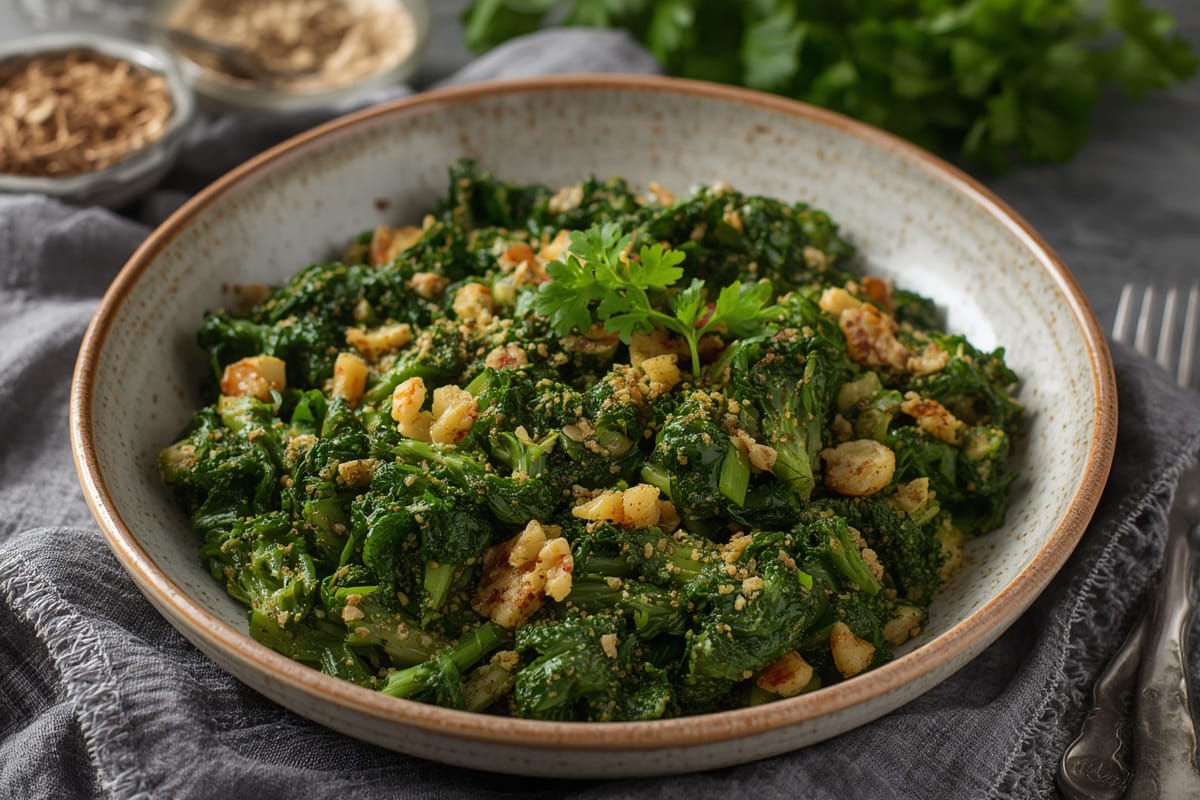
Nothing transports me back to my Charleston roots faster than the earthy aroma of collard greens simmering on the stove. Today, I’m sharing my family’s cherished collard greens recipe—a dish that’s equal parts nourishment and nostalgia. We’ll explore foolproof cooking methods, smart ingredient swaps, and the rich cultural tapestry behind this Southern icon. Whether you’re craving tradition or keen to experiment, you’ll find your skillet ready.
Grandma’s Iron Skillet Wisdom: The Heart of Our Collard Greens Recipe
Why Collards Capture Southern Souls
My grandma never measured a thing. She’d tear emerald leaves with hands toughened by decades on Johns Island, murmuring, “Good greens ain’t rushed, baby.” Her collard greens recipe wasn’t just food—it was alchemy. She transformed humble veggies into velvety, potlikker-rich magic using smoked turkey necks (never pork, in our kitchen), apple cider vinegar, and patience. Those Sunday dinners taught me collards aren’t just side dishes; they’re storytellers.
The Cultural Pot from Which Our Collards Simmer
Collard greens simmer in history as much as broth. Enslaved Africans braided their West African stewing traditions with Native American ingredients and European cookware, creating what we now call soul food. Every bite of this collard greens recipe honors that resilience. When I serve mine at Charleston farmers’ markets today, elders nod knowingly—modern twists can’t mask the dish’s true roots.
Crafting Your Collards: Ingredients and Timeline
Your Flavor Arsenal: Fresh & Flexible
| Ingredient | Purpose & Swaps |
|---|---|
| 2 lbs fresh collards | Base: sub kale or mustard greens |
| 1 smoked turkey leg | Umami depth: use smoked paprika + olive oil for vegan |
| 1/4 cup apple cider vinegar | Brightness: sub white wine vinegar |
| 3 garlic cloves, smashed | Aromatic base: sub 1 tsp garlic powder |
Time Investment: Low Fuss, High Reward
This collard greens recipe takes 90 minutes total—30% less than traditional methods. Here’s why:
- Prep (25 mins): Stem removal, chopping, sautéing
- Simmer (65 mins): Hands-off tenderness development
Compare this to old-school 3-hour boils! Quick-soak your greens in vinegar water to cut bitterness fast.
Step-by-Step to Silky Greens Perfection
- Rinse & Ribbon: Dunk leaves in cold water, then strip stems with a knife. Stack leaves, roll tightly, slice into 1-inch ribbons.
- Sear & Soften: Brown turkey in olive oil over medium heat. Toss in garlic until golden—watch closely!
- Deglaze & Merge: Splash vinegar into the pot, scraping up those flavor-packed browned bits. Add greens in batches—they’ll wilt dramatically.
- Low & Slow: Cover with broth, simmer gently 55-65 mins. Stir just twice—collards bruise easily!
Pro Tip: Add a pinch of sugar if your greens taste sharp. Balance is everything.
Mastering Texture and Tradition
The Slow-Cook Secret to Tender (Not Mushy) Greens
Too many collard greens recipes turn leaves to sludge. Here’s how we avoid that:
- Blanch First: Dunk greens in boiling water 90 seconds, then ice bath. Sets color, softens fibers.
- Simmer, Don’t Boil: Keep bubbles at a lazy burble. Vigorous boiling shreds leaves.
Test doneness at 50 mins—greens should yield but retain structure, like al dente pasta.
Collards Through the Centuries: A Timeless Tapestry
During Reconstruction, collards became a lifeline—nutrient-dense and growable in poor soil. The “potlikker” (broth) was often sipped like medicine, rich in vitamins leached from leaves. Today’s vegan versions honor that ingenuity, swapping smoked meat for shiitake mushrooms or liquid smoke.
Modern Twists & Must-Know Facts
Bold Variations to Match Your Mood
- Creole-Style: Add diced tomatoes and a dash of hot sauce in the last 10 mins.
- Sunshine Bowl: Top hot greens with orange segments and toasted pecans.
- Greens ’n Grains: Fold cooked collards into quinoa with lemon zest.
Always finish with vinegar or lemon juice—acidity lifts the dish.
Why Collards Deserve Your Weekly Rotation
Collards boast more calcium per cup than milk and a day’s worth of vitamin K. Their sulforaphane fights inflammation—Grandma knew best! Store leftovers in their potlikker; flavors deepen overnight.
Collard greens aren’t just food; they’re edible heirlooms. My grandma’s collard greens recipe survives through every pot I share—her whispers in the steam, her insistence that good things take time. Now it’s your turn: grab that Dutch oven, channel your kitchen ancestors, and let those greens simmer low and proud. Got a twist on the classic? I’m all ears—drop your version in the comments!